|
Yidan Xue (薛逸丹) I develop credible computational and AI-enabled modelling frameworks for in-silico trials of cardiovascular medical devices, with a current focus on transcatheter heart valves. I am a BHF/UK CEiRSI Transition Fellow at the University of Manchester, based in the Manchester BHF Centre of Research Excellence and the UK Centre of Excellence on In-Silico Regulatory Science and Innovation (UK CEiRSI). My research combines mechanistic simulation, numerical methods, virtual patient populations, and regulatory science to support patient-specific risk prediction and device evaluation. Previously, I held postdoctoral positions in applied mathematics at Cardiff University and the University of Oxford, and completed my DPhil at Oxford on modelling oxygen transport and tissue damage in the human brain. |

|
Research |
|
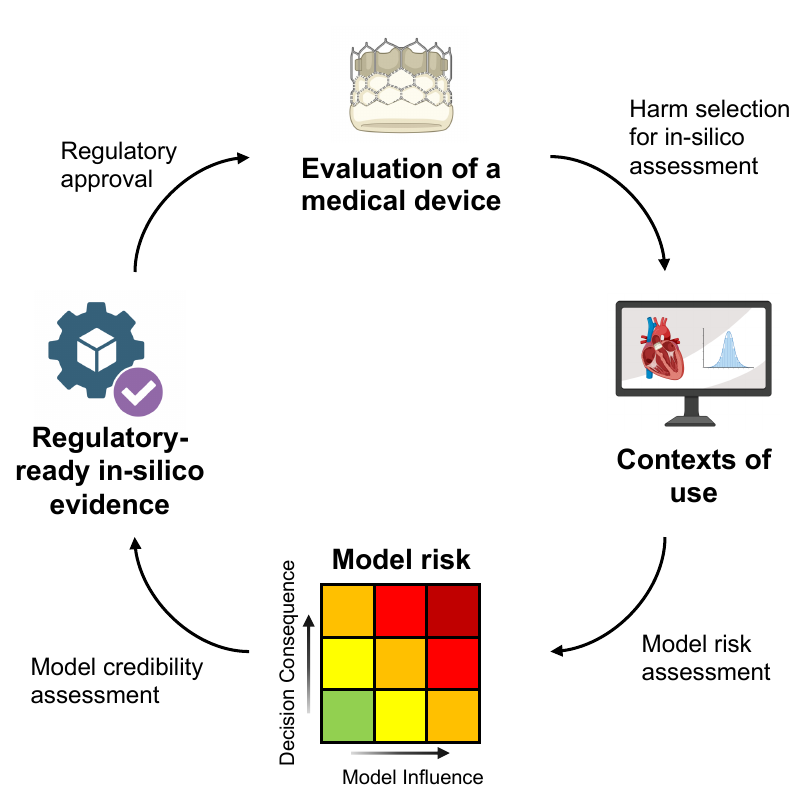
Risk-informed framework for in silico regulatory evaluation of medical devices
Yidan Xue, Ali Sarrami-Foroushani, Steven Kreuzer, Cahal McVeigh, Mark Grumbridge, René Bombien, Alexander McLaren, Pawan Kumar Pandey, Adesola Samson Ademiloye, Parker Tyler, Michael MacRaild, Arezoo Zakeri, Alistair Revell, Geoffrey Banda, Daniel Hill, Perumal Nithiarasu, Andrea Manfrin, Martha De Cunha Maluf-Burgman, Alejandro F Frangi Device, 2026 press release A risk-informed framework developed with regulators, industry, and academia links device-related harm prioritisation to model credibility assessment and hybrid bench and clinical validation, using a redesigned TAVI device as an exemplar for generating credible in-silico regulatory evidence. |
|
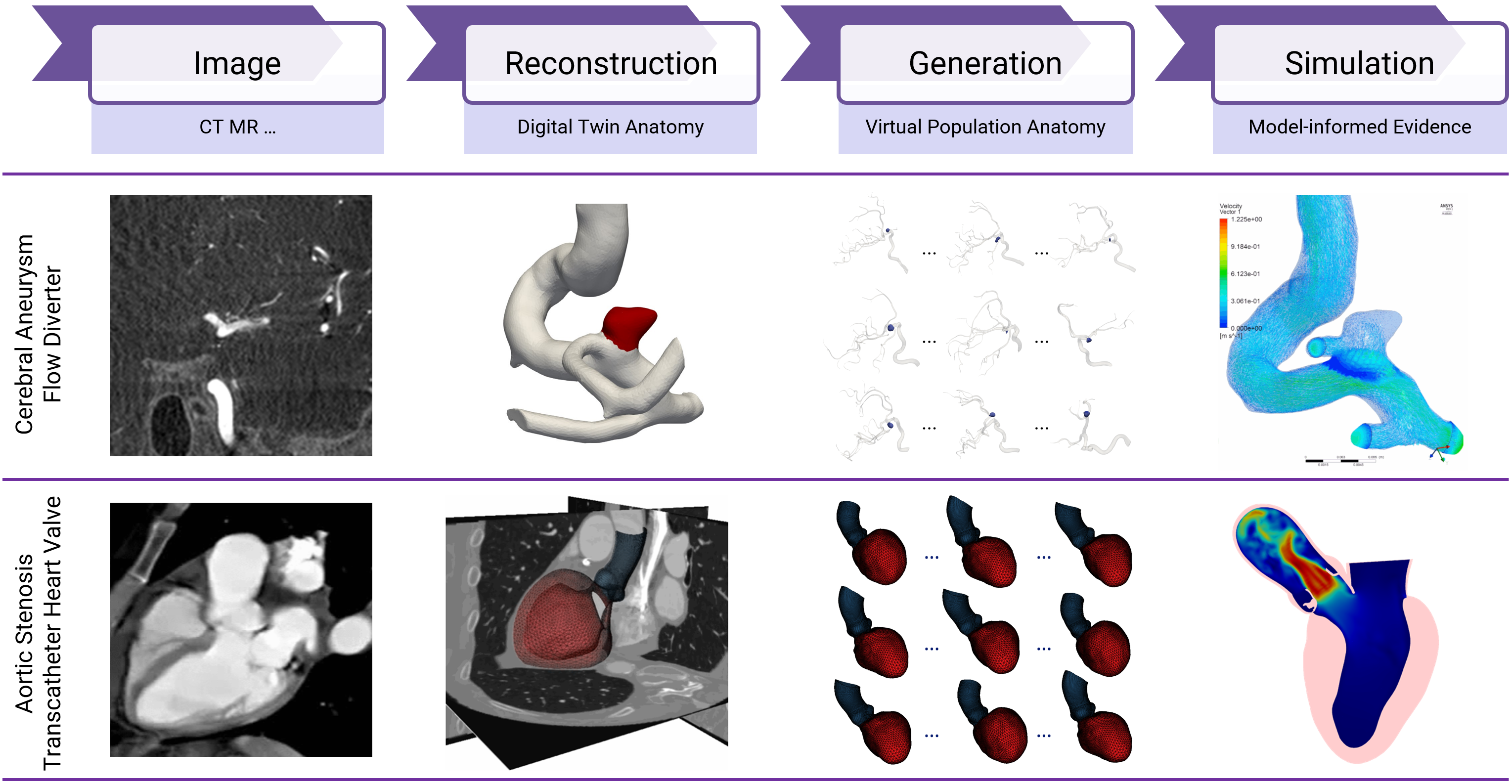
From Pixels to Polygons: A Survey of Deep Learning Approaches for Medical Image-to-Mesh Reconstruction
Fengming Lin, Arezoo Zakeri, Yidan Xue, Michael MacRaild, Haoran Dou, Zherui Zhou, Ziwei Zou, Ali Sarrami-Foroushani, Jinming Duan, Alejandro F Frangi Medical Image Analysis, 2026 A survey categorising deep learning-based medical image-to-mesh reconstruction into template, statistical, generative, and implicit model families, with quantitative comparisons across cardiac, neurological, and other anatomical applications. |
|
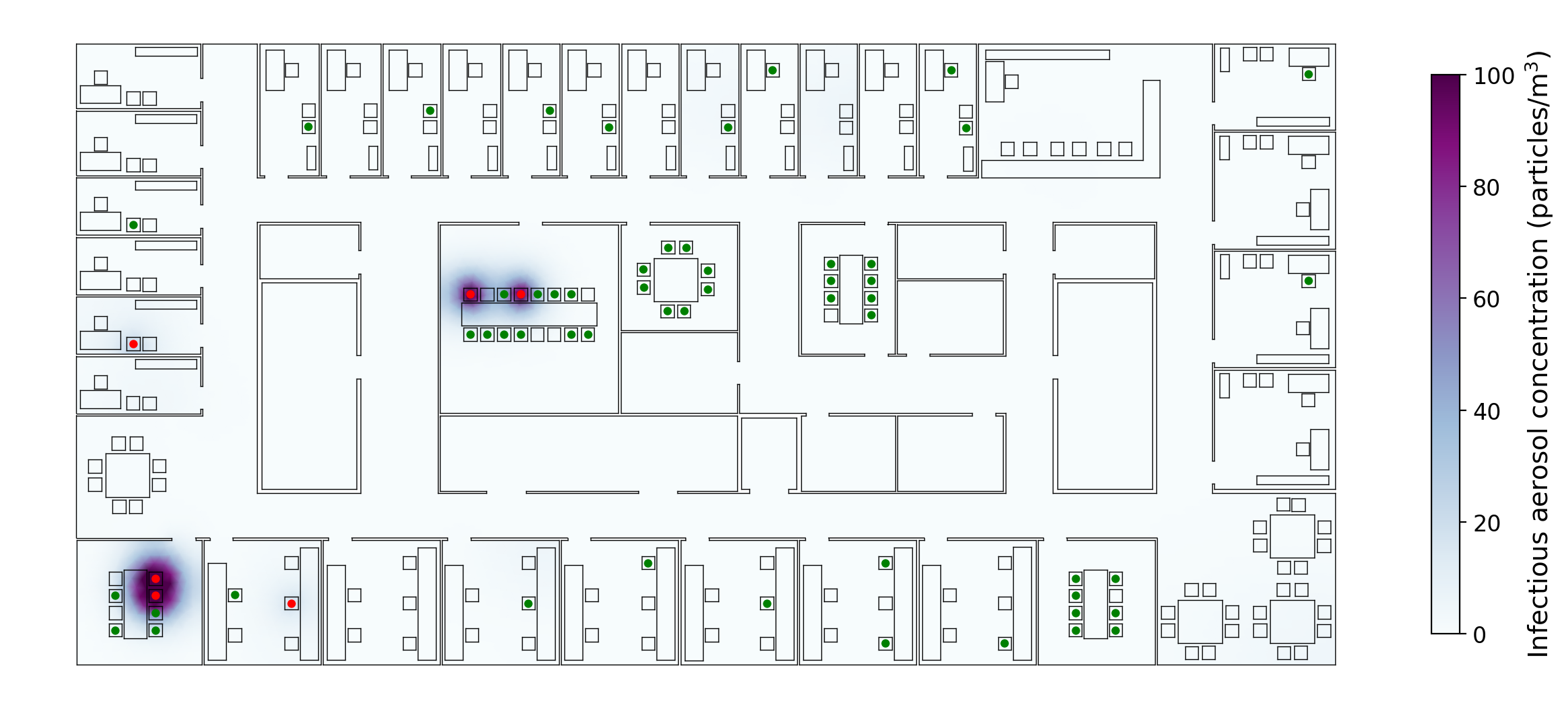
3D Topological Modeling and Multi-Agent Movement Simulation for Viral Infection Risk Analysis
Wassim Jabi, Yidan Xue, Thomas E Woolley, Katerina Kaouri Architectural Science Review, 2025 code An integrated method combining topological 3D building models, multi-agent movement simulation, and an extended Wells–Riley airborne transmission model to assess infection risk as a function of spatial design and occupant behaviour. |
|
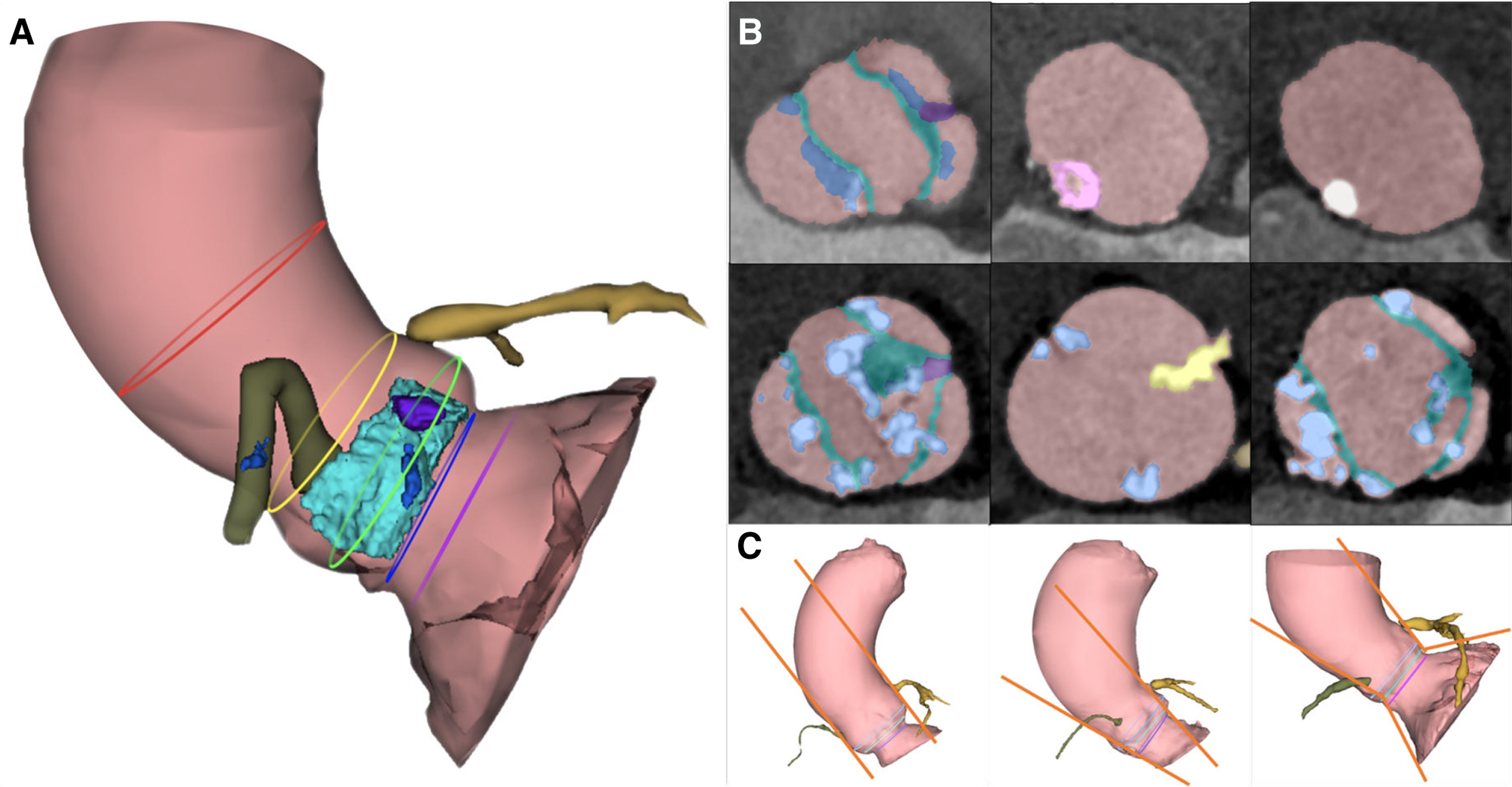
Precision TAVR Quantification — AI-accelerated TAVR Planning Reduces Assessment Time by 80% in Bicuspid Aortic Stenosis
Yu Mao, Yang Liu, Mengen Zhai, Ping Jin, Wenjing Li, Xinglong Dong, Fangyao Chen, Xiaodong Wang, Yanchi Wang, Gejun Zhang, Hongxin Li, Yining Yang, Haibo Zhang, Jian Liu, Yingqiang Guo, Yongjian Wu, Yidan Xue, Junpeng Zhang, Alejandro Frangi, Jian Yang European Heart Journal – Imaging Methods and Practice, 2025 Cardioverse, the first fully automated deep learning algorithm for bicuspid aortic valve anatomical assessment in TAVR planning, reduces measurement time by 80% and user interactions by 85% while maintaining high accuracy across a 16-centre cohort of 1,147 patients. |
|
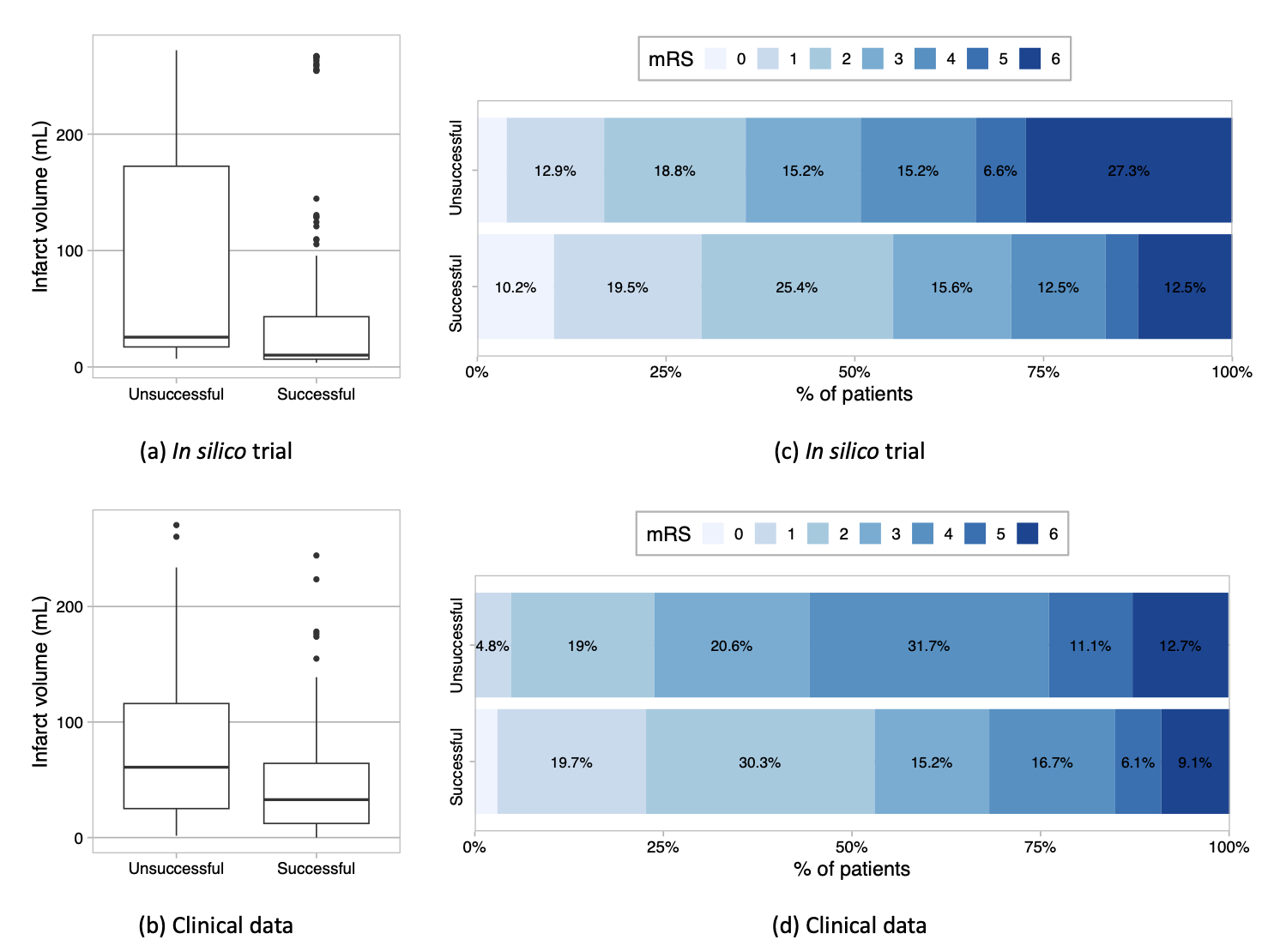
In silico trials of acute ischemic stroke: predicting the total potential for improvement to patient functional outcomes
Claire M. Miller, Raymond Padmos, Praneeta Konduri, Tamás István Józsa, Yidan Xue, Nerea Arrarte Terreros, Max van der Kolk, Stephen Payne, Henk Marquering, Charles Majoie, Alfons Hoekstra arXiv, 2025 An in-silico trial framework quantifies the maximum potential benefit of full recanalisation and early treatment for acute ischaemic stroke, predicting functional independence rates across a virtual patient population using multi-scale perfusion and tissue injury models. |
|
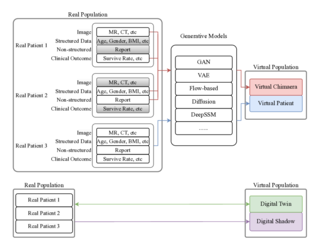
Synthetic Anatomy: Deep Learning Models for Virtual Population Generation — A Review
Zherui Zhou, Arezoo Zakeri, Haoran Dou, Yidan Xue, Michael MacRaild, Jinghan Huang, Fengming Lin, Ali Sarrami-Foroushani, Jinming Duan, Alejandro F Frangi medRxiv, 2025 A systematic review of deep learning methods for generating virtual organ populations for in-silico trials, analysing fidelity, utility, generalisability, and diversity across template, statistical, generative, and implicit model families. |
|
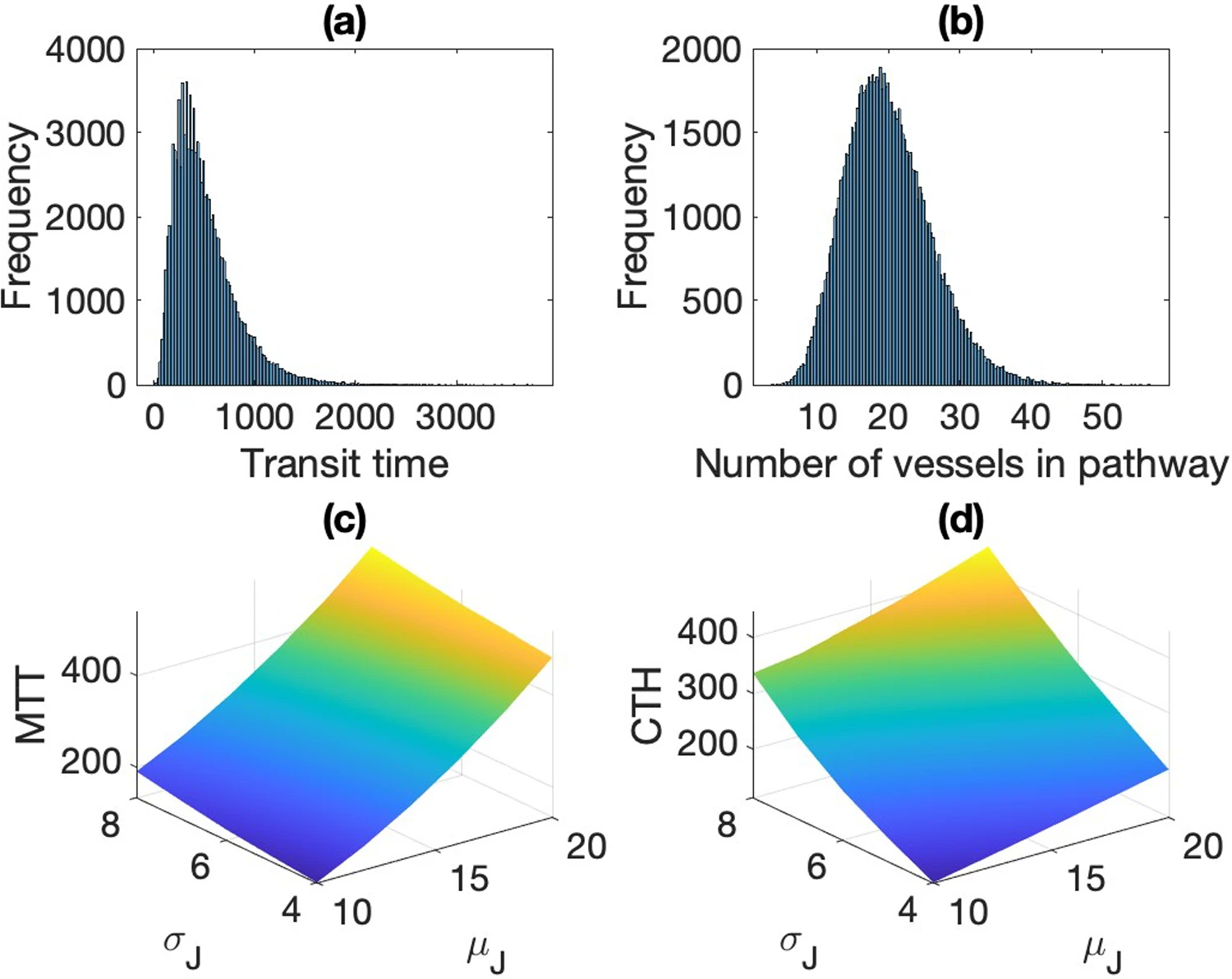
Transit time mean and variance are markers of vascular network structure, wall shear stress distribution and oxygen extraction fraction
Stephen J Payne, Yidan Xue, Jen-Feng Kuo, Wahbi K El-Bouri Biomechanics and Modeling in Mechanobiology, 2025 Transit time distributions in vascular networks encode intrinsic geometric information: mean transit time approximates tissue permeability while relative transit time heterogeneity is a marker of wall shear stress variability and oxygen extraction fraction. |
|
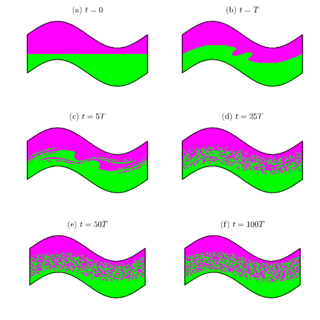
Computing Stokes flows in periodic channels via rational approximation
Yidan Xue Proceedings of the Royal Society A, 2025 code A new algorithm for computing two-dimensional Stokes flows in periodic channels using trigonometric rational functions, with poles placed via the AAA-least squares algorithm, achieving at least six-digit accuracy in under one second. |
|
Stokes flows in a two-dimensional bifurcation
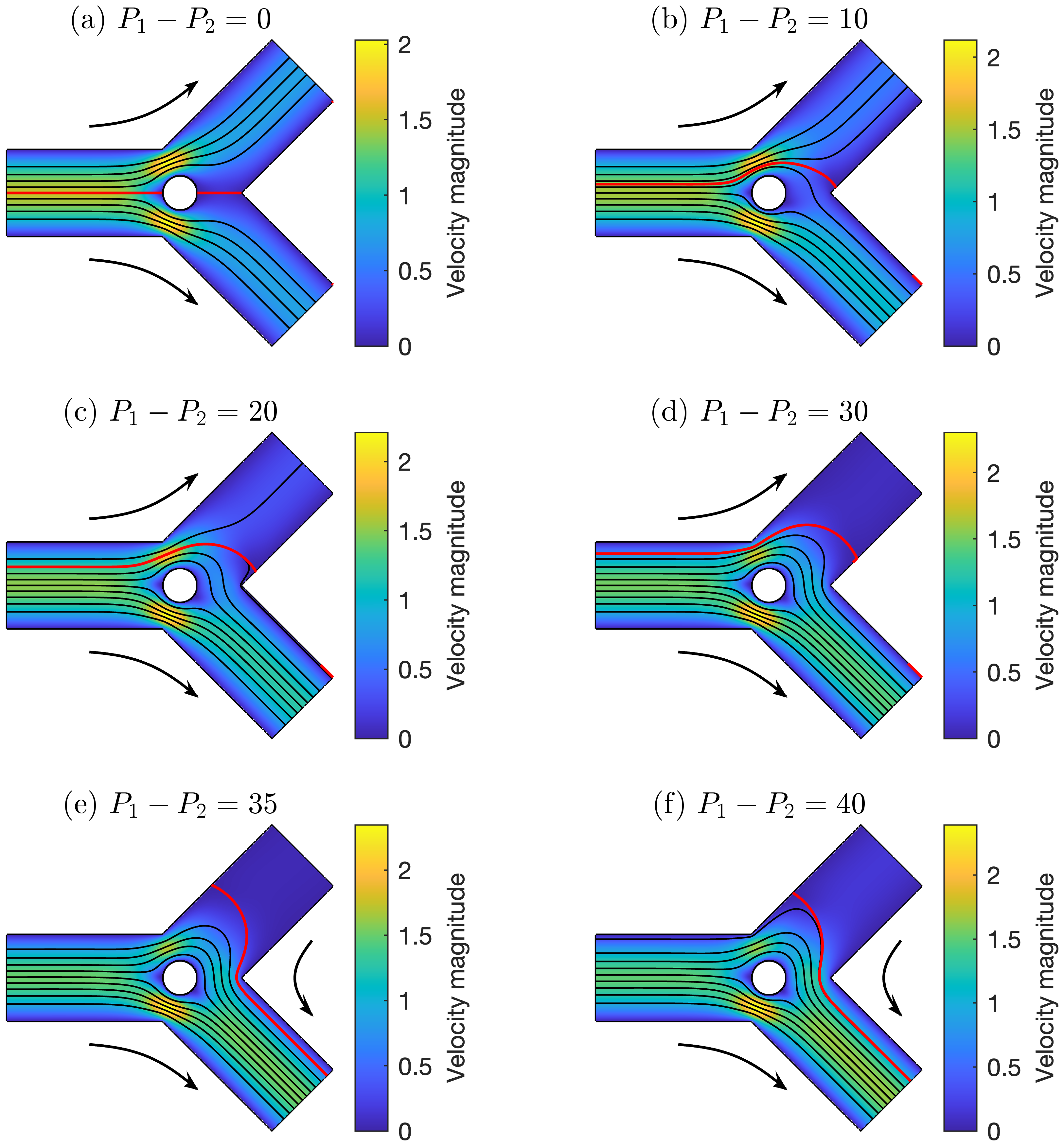
Yidan Xue, Stephen J Payne, Sarah L Waters Royal Society Open Science, 2025 code The LARS algorithm is used to compute Stokes flows in 2D bifurcations with varied geometry and fixed objects, showing that Poiseuille's law can substantially misestimate flow conductance; machine-learned surrogate models provide more accurate approximations. |
|
Modelling indoor airborne transmission combining architectural design and people movement using the VIRIS simulator and web app
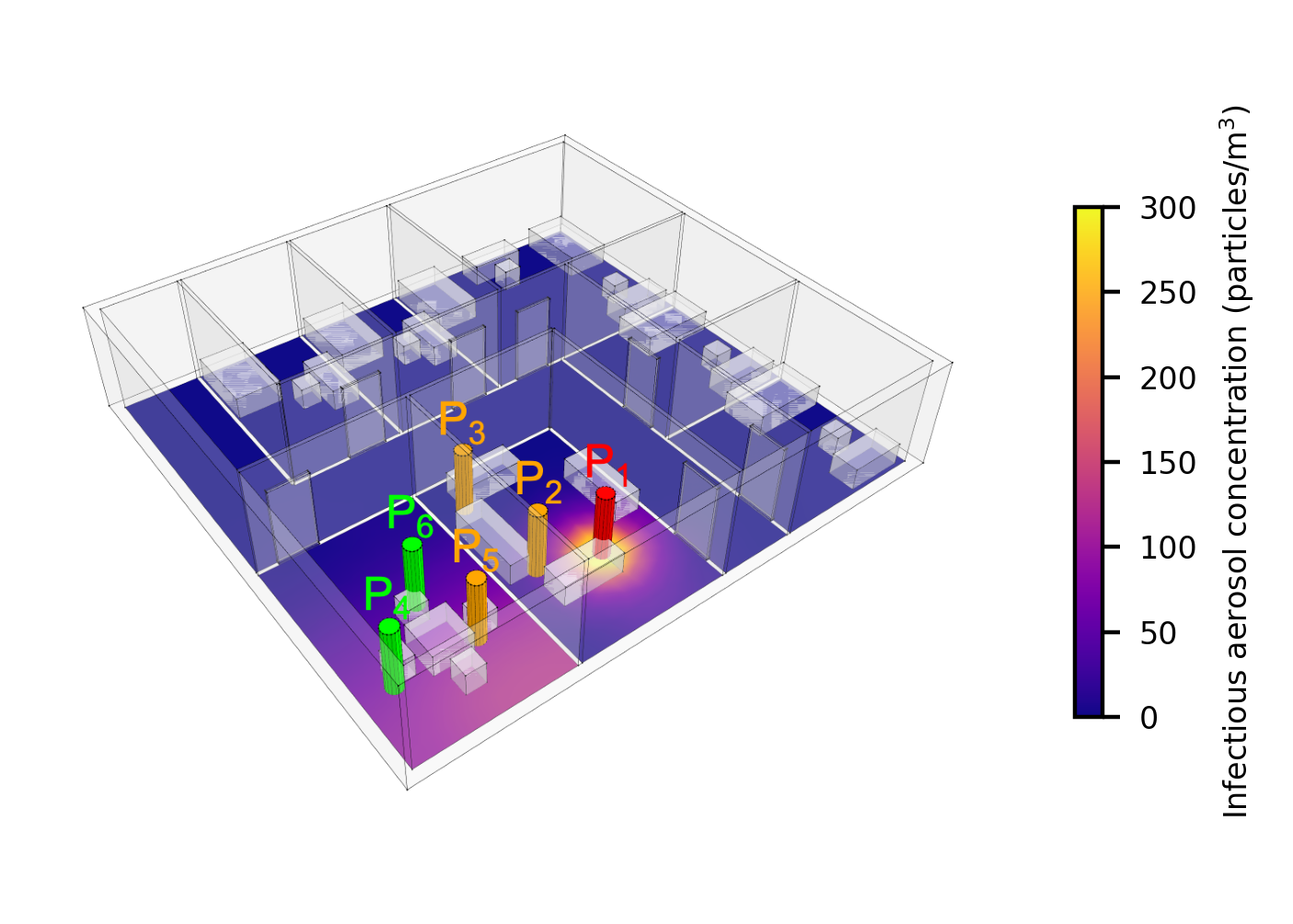
Yidan Xue, Wassim Jabi, Thomas E Woolley, Katerina Kaouri Scientific Reports, 2024 code / web app / SIAM News VIRIS is an agent-based simulator combining indoor movement, detailed architectural design, and viral aerosol transmission for rapid comparison of non-pharmaceutical interventions, validated against a courtroom superspreader event. |
|
Computation of two-dimensional Stokes flows via lightning and AAA rational approximation
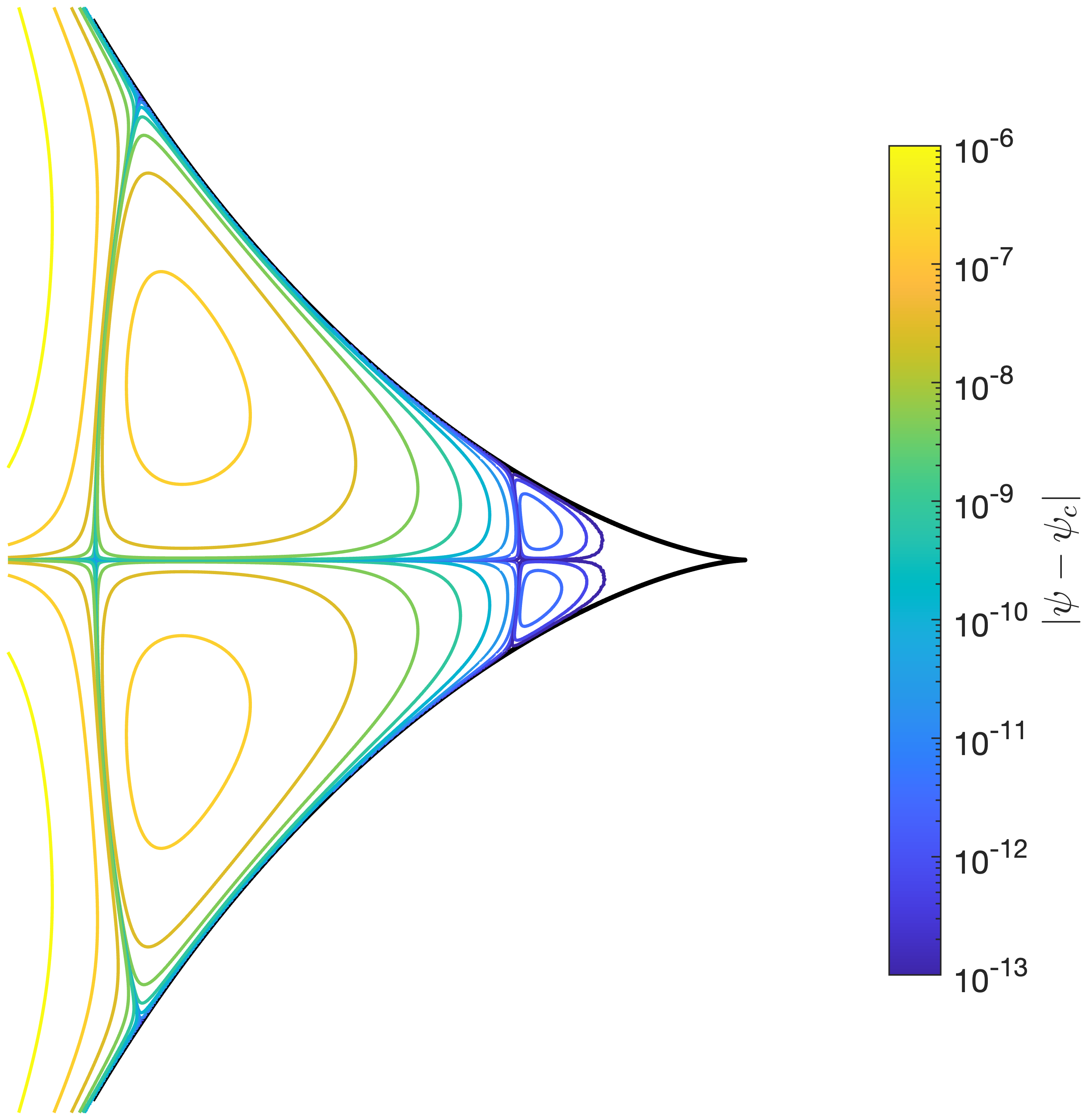
Yidan Xue, Sarah L Waters, Lloyd N Trefethen SIAM Journal on Scientific Computing, 2024 code The LARS (Lightning-AAA Rational Stokes) algorithm computes two-dimensional Stokes flows in general smooth and multiply connected domains with at least six-digit accuracy in under one second, using rational approximation of Goursat functions. |
|
Quantification of hypoxic regions distant from occlusions in cerebral penetrating arteriole trees
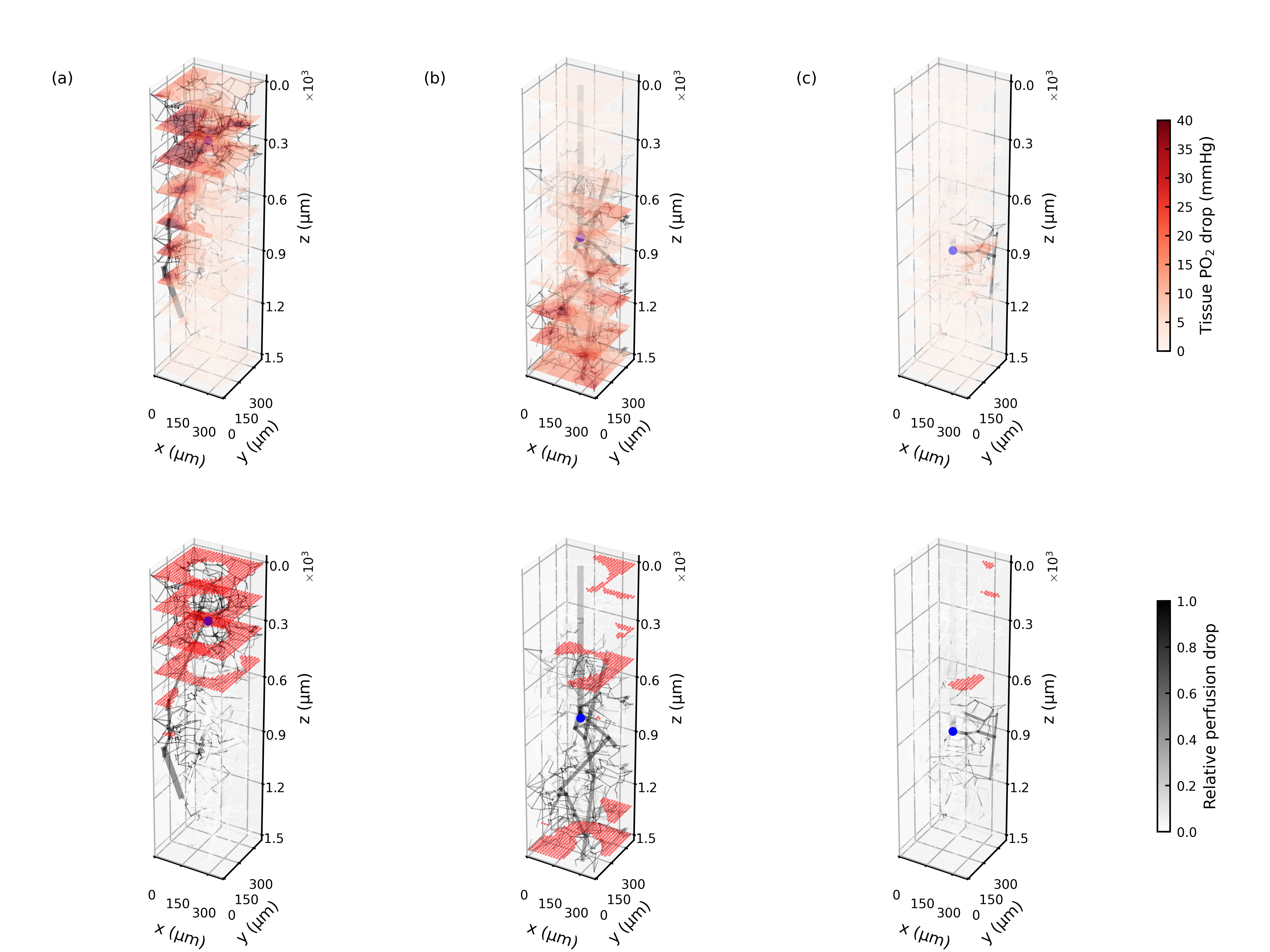
Yidan Xue, Theodosia Georgakopoulou, Anne-Eva van der Wijk, Tamás I Józsa, Ed van Bavel, Stephen J Payne PLOS Computational Biology, 2022 In vivo microembolism experiments and in silico simulations of cerebral penetrating arteriole occlusions reveal that hypoxic regions form at sites distant from occlusions, primarily due to downstream hypoperfusion in the affected arteriole territory. |
|
In silico trials for treatment of acute ischemic stroke: design and implementation
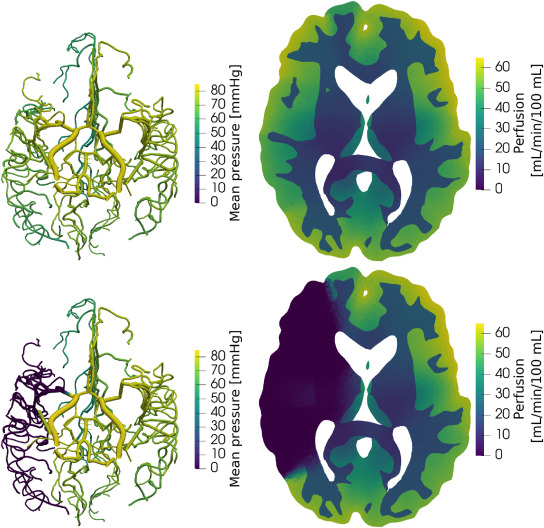
Claire Miller, Raymond M Padmos, Max van der Kolk, Tamás I Józsa, Noor Samuels, Yidan Xue, Stephen J Payne, Alfons G Hoekstra Computers in Biology and Medicine, 2021 An event-based modelling framework for in-silico trials of acute ischaemic stroke, integrating multi-scale perfusion, intervention, and tissue injury models with a statistical virtual patient population to predict 90-day functional outcomes. |
|
Modelling the effects of cerebral microthrombi on tissue oxygenation and cell death
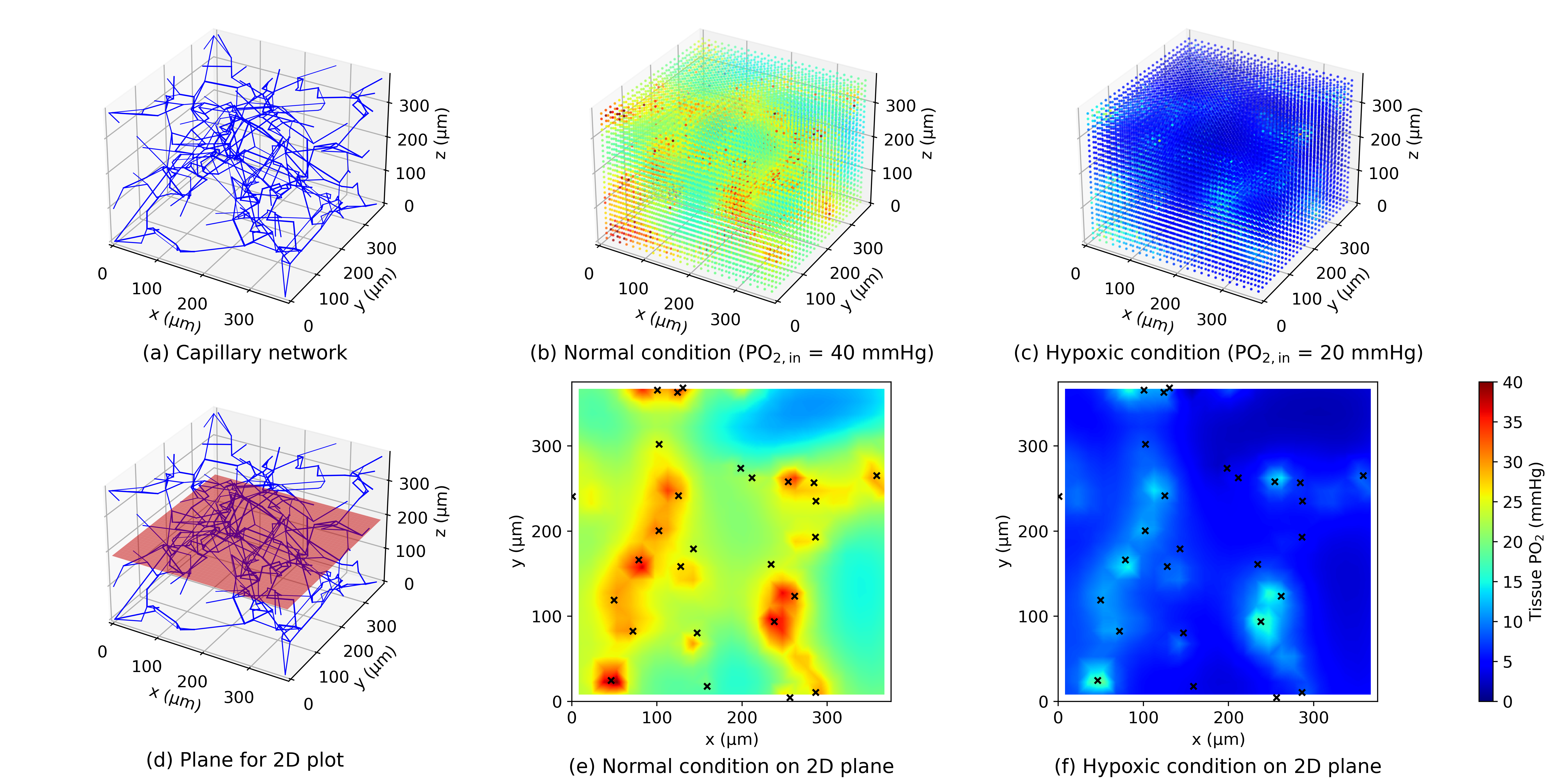
Yidan Xue, Wahbi K El-Bouri, Tamás I Józsa, Stephen J Payne Journal of Biomechanics, 2021 A new framework quantifies the effects of cerebral microthrombi on oxygen transport and tissue death, combining a Green's function perfusion model with a thrombus extravasation model and a hypoxia-based 3-state cell death model. |
|
Formation of vortices in idealised branching vessels: a CFD benchmark study
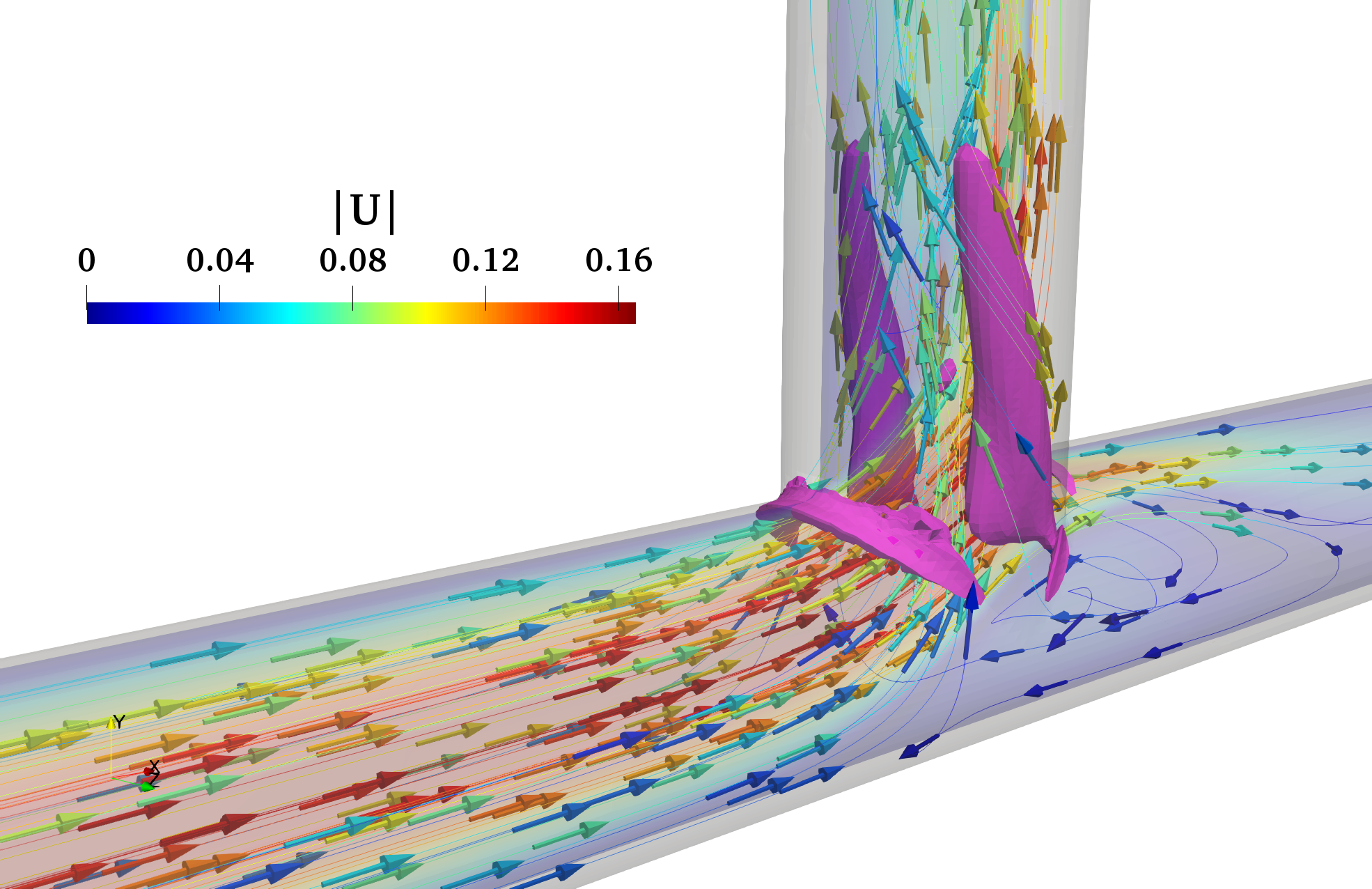
Yidan Xue, Rudolf Hellmuth, Dong-hyuk Shin Cardiovascular Engineering and Technology, 2020 A CFD benchmark study validates vortex detection in idealised branching blood vessels against experiments by Karino and Goldsmith, and proposes a surrogate model for vortex size as a function of Reynolds number and bifurcation geometry. |
TalksSpeaking invitations
Contributed presentations
|
Professional roles and memberships
|
Miscellanea
|
|
Template from Jon Barron. Last updated: October 2026. |